Film-maker and creative directorDubai, UAE

Rizwan Sajith

Creative direction, film and brand experiences for complex industries.

From 2020
Film and television, India. Associate director on the Sun TV series Thirumagal, assistant director on Farhana, senior assistant director on DNA.
2024 to now
Creative Director & Production Lead, Gravity Business Process, Dubai. Six industrial brands, a team of three to five.
Open to creative lead and creative director roles, UAE See three projects Download resume
  1. ADIPEC 2026Exhibition content programme
  2. Field digitalizationInteractive display in English and Arabic
  3. Rapid intervention vehicleAI-generated film, 1:04
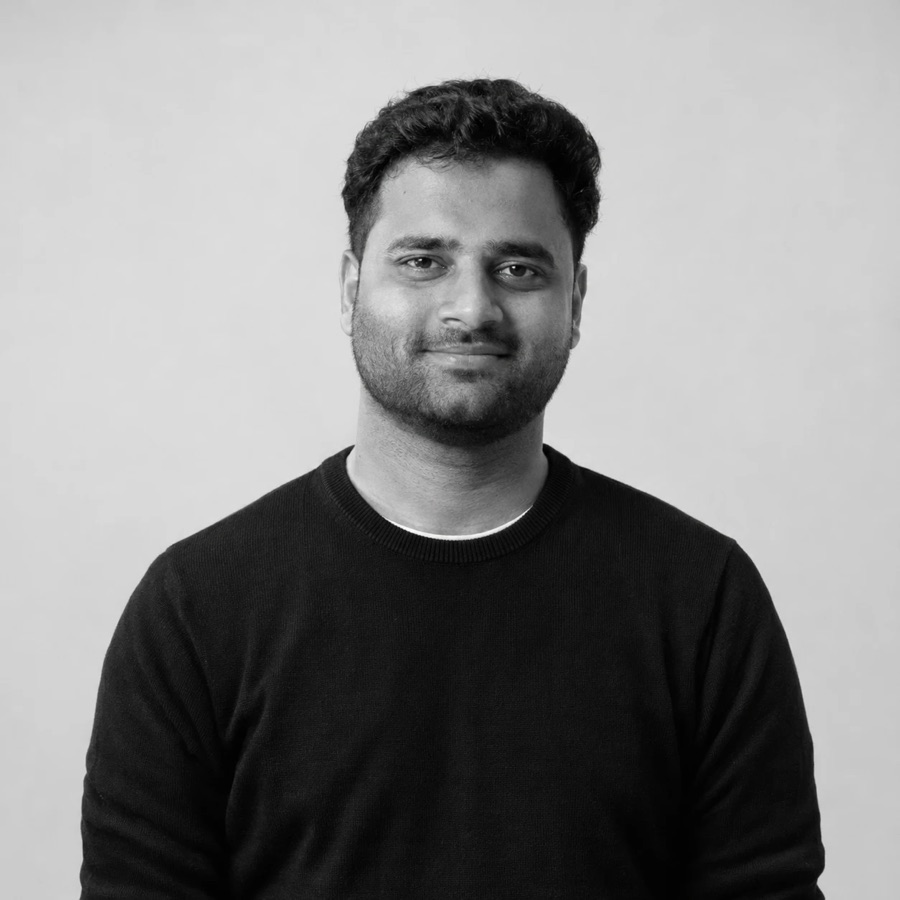
Portrait of Rizwan Sajith

I make technical products easy to understand, and I deliver the work on dates that cannot move.

I started in film. From 2020 I worked on direction teams in Tamil television and cinema, from associate director on a daily Sun TV series to senior assistant director on a feature film: preparing scenes, scheduling, briefing the art department on sets with concepts and reference designs, running the floor on shooting days and following each film through post-production. Since 2024 I have brought that training to Dubai as creative director at Gravity Business Process, directing work for six industrial brands with a team of three to five designers, editors and production staff. Together we have delivered four exhibition programmes, including ADIPEC twice, and eight film projects, and built three interactive displays, one of which ran on the ADIPEC 2026 stand. The team also produces monthly LinkedIn campaigns.

Brands I direct work for
East Wind Safety
GravitEx
Serve Gas Qatar
Pallet Souq
Gravity BP and GravityMEA (my employer)
Manufacturers those brands represent
Dräger
MIMES
One Seven
xShielder
Nardi
Sectors
Oil and gas
Petrochemical and process
Fire and rescue
Marine and offshore
Industrial safety

Apart from FIAT, a personal film, everything shown here was made in my role at Gravity Business Process and is shown as a record of that role. The manufacturers named are represented by those brands; they were not my clients. Product claims that appear in the work are the brands' and manufacturers' own. Names and marks belong to their owners.

Exhibition programmes since 2025, ADIPEC twice
4
Interactive displays built; one ran on the ADIPEC 2026 stand
3
Film projects by my team for these brands, 2025 to 2026
8
Designers, editors and production staff I lead
3–5
Working in film since
2020
01.

One stand, one connected story

Flagship project. Exhibition programme

ADIPEC 2026, Abu Dhabi

The content programme for the East Wind stand: a countdown, loops for four LED screen shapes, an interactive display and films cut during the show.

Made for
East Wind Safety, in my role at Gravity Business Process. The stand carried Dräger's name beside East Wind's, with products from MIMES, One Seven and xShielder. East Wind represents these manufacturers.
When and where
2 to 5 November 2026. ADNEC, Abu Dhabi. Stand 10730, Hall 10.
Status
Delivered. The stand itself was built by an outside contractor.
My role and team
Creative director. I set the content plan, briefed the designers and editors, and directed the screen content and the coverage on the floor.
Business problem
East Wind sells and services safety equipment made by several manufacturers. On a show floor that can read as a shelf of unrelated products, with no single reason to stop.
Audience
HSE, engineering and procurement staff from energy operators and contractors, crossing a very large hall with little time.
Constraints
Four LED screen shapes (1200 × 600, 1800 × 600, 400 × 1000 and 600 × 1000 pixels), a fixed opening morning, and new content needed on every day of the show.
The idea
Show the connection instead of listing the products. East Wind's line for the show was one connected safety ecosystem, so the content follows a reading from the sensor to the control room, and each partner's product appears inside an East Wind frame.
Decisions and reasons
  1. A master for each screen shape, not one stretched file. Type that reads on an 1800-pixel banner is lost on a 400-pixel column.
  2. One layout for the whole countdown. Each day changes the product and nothing else, so the series is recognisable by its second post.
  3. An interactive display beside the films, because the visitors worth a conversation want to try the system.
  4. Coverage cut on the show floor and exported the same day, while a film can still bring someone to the stand.
Execution
Before the show: a LinkedIn countdown that began eleven days out. On the stand: an 88-second title loop and six product films in each of the four LED formats, further films made for one screen each, among them a portrait loop for the Nardi One compressor, and the field digitalization display. During the show: photo sets and a finished film each day.
Quality checks
Each film was exported at the pixel size of its screen and filed by screen. The product films were exported on 31 October and the four title loops on 1 November, the day before opening; a revised title loop and further films were added on the opening morning. A finished edit of the coverage was exported on each day of the show.
Results
Content was delivered for all four screen formats, and a finished film on each of the four days. On East Wind's public LinkedIn page, the nine ADIPEC posts published from day three to the close of the show had drawn 261 reactions by 11 November 2026, on a page of about 1,500 followers.
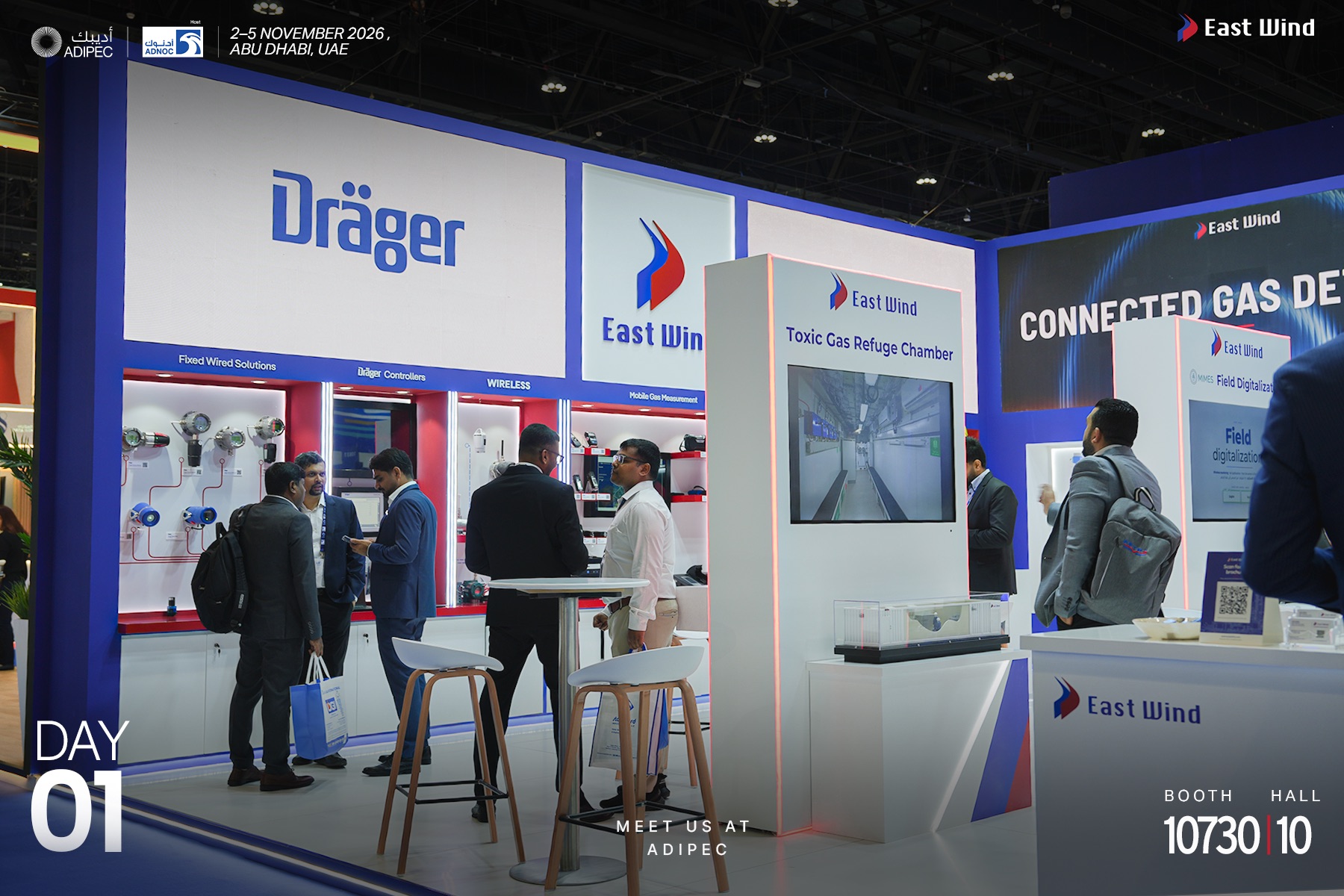
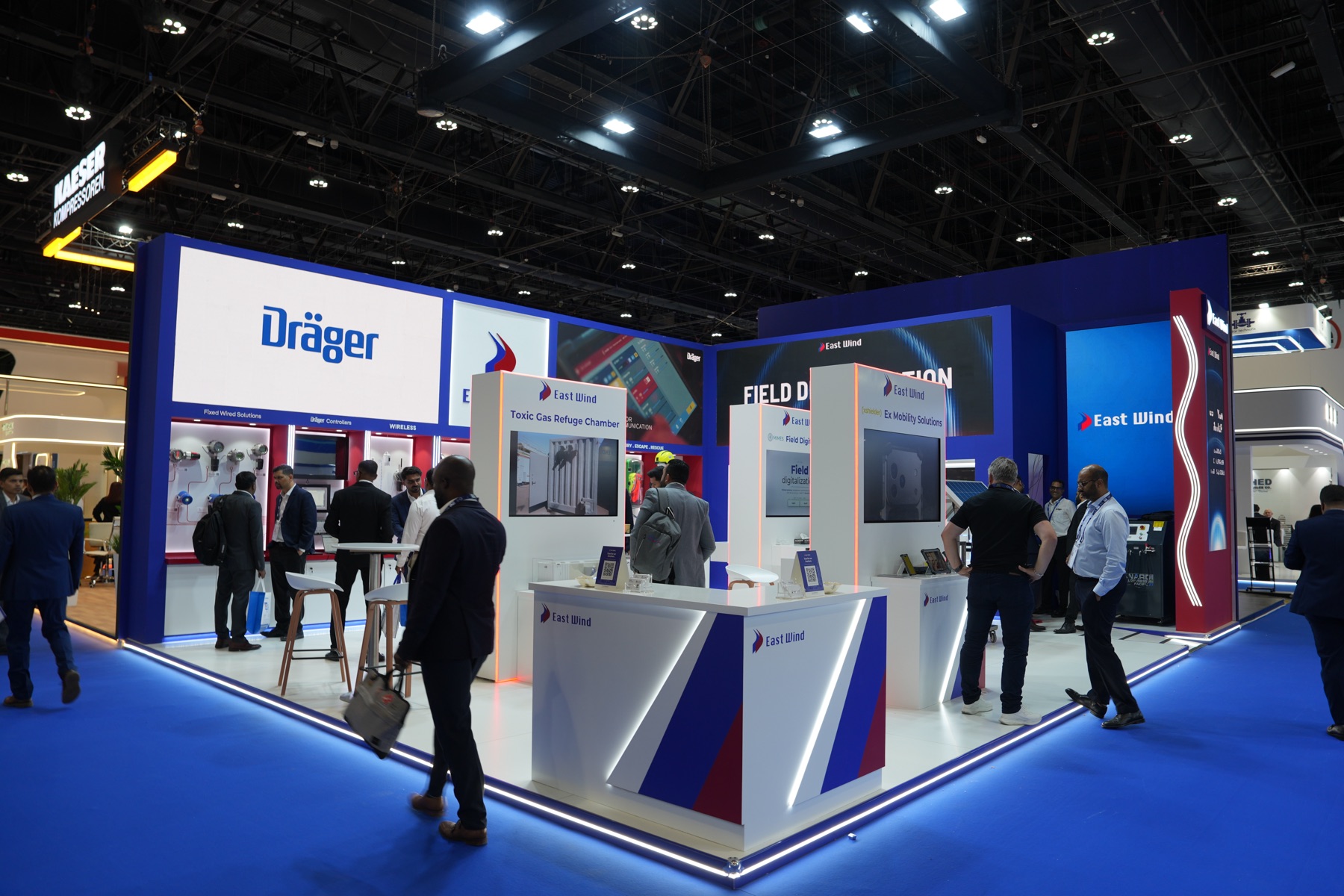
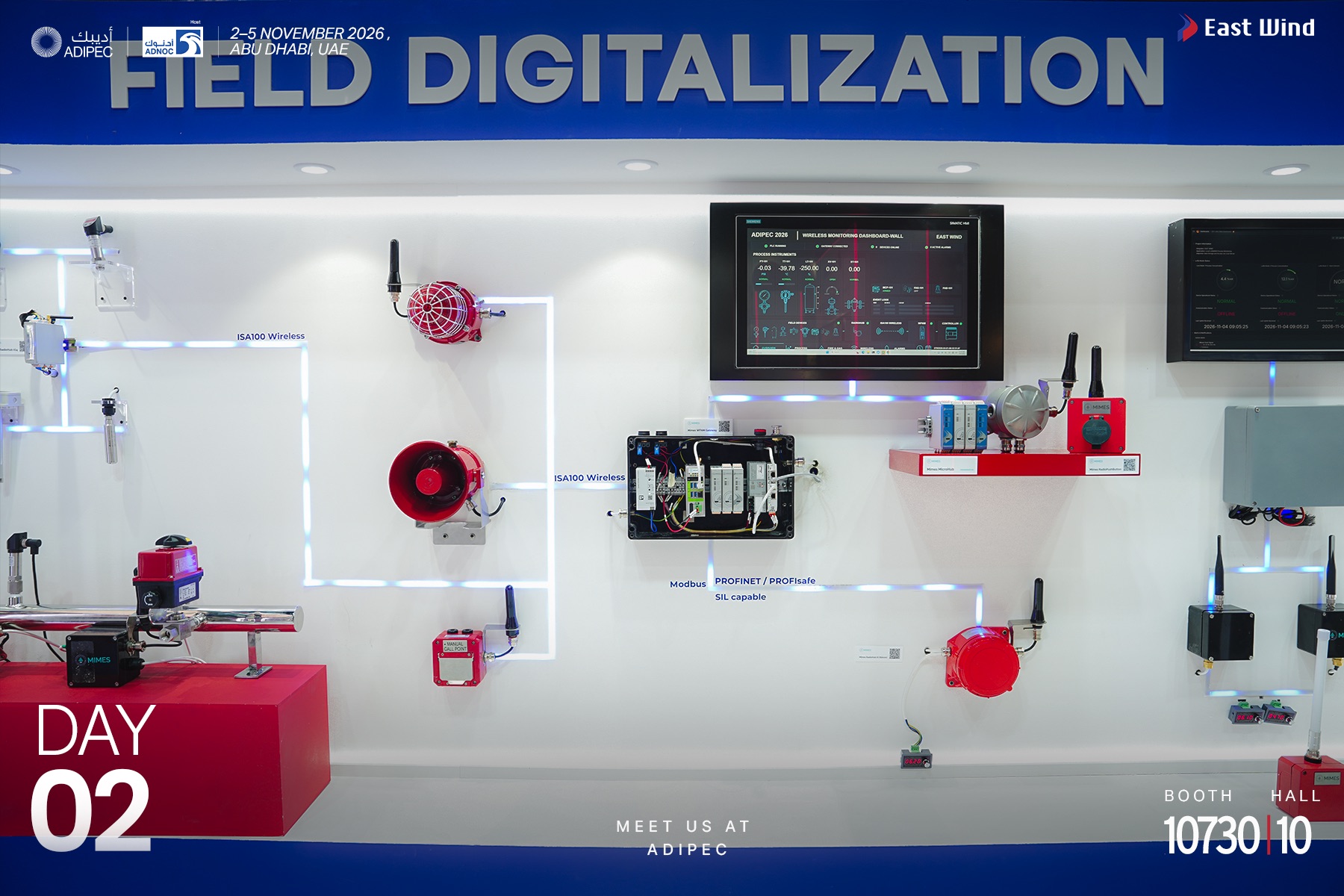
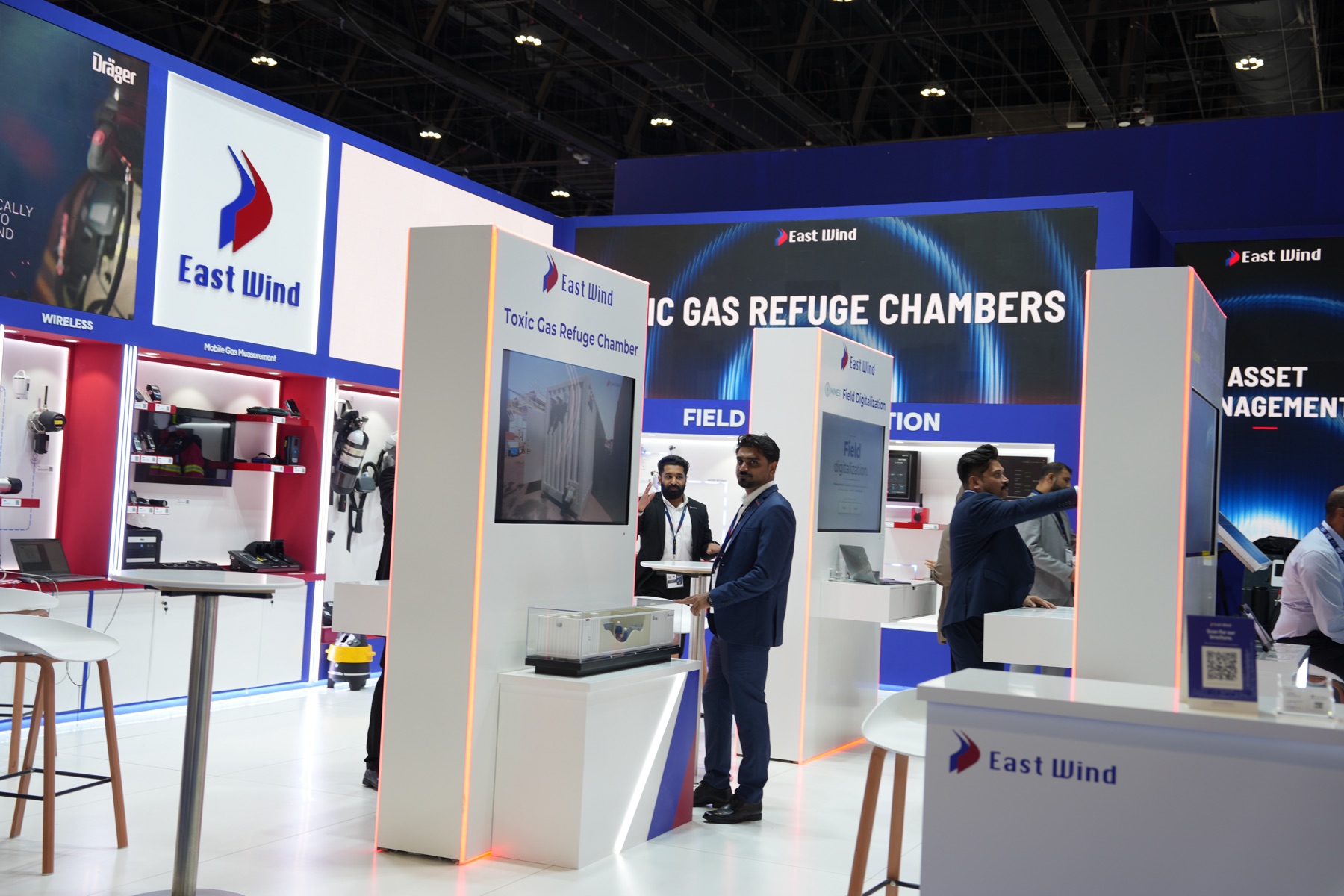
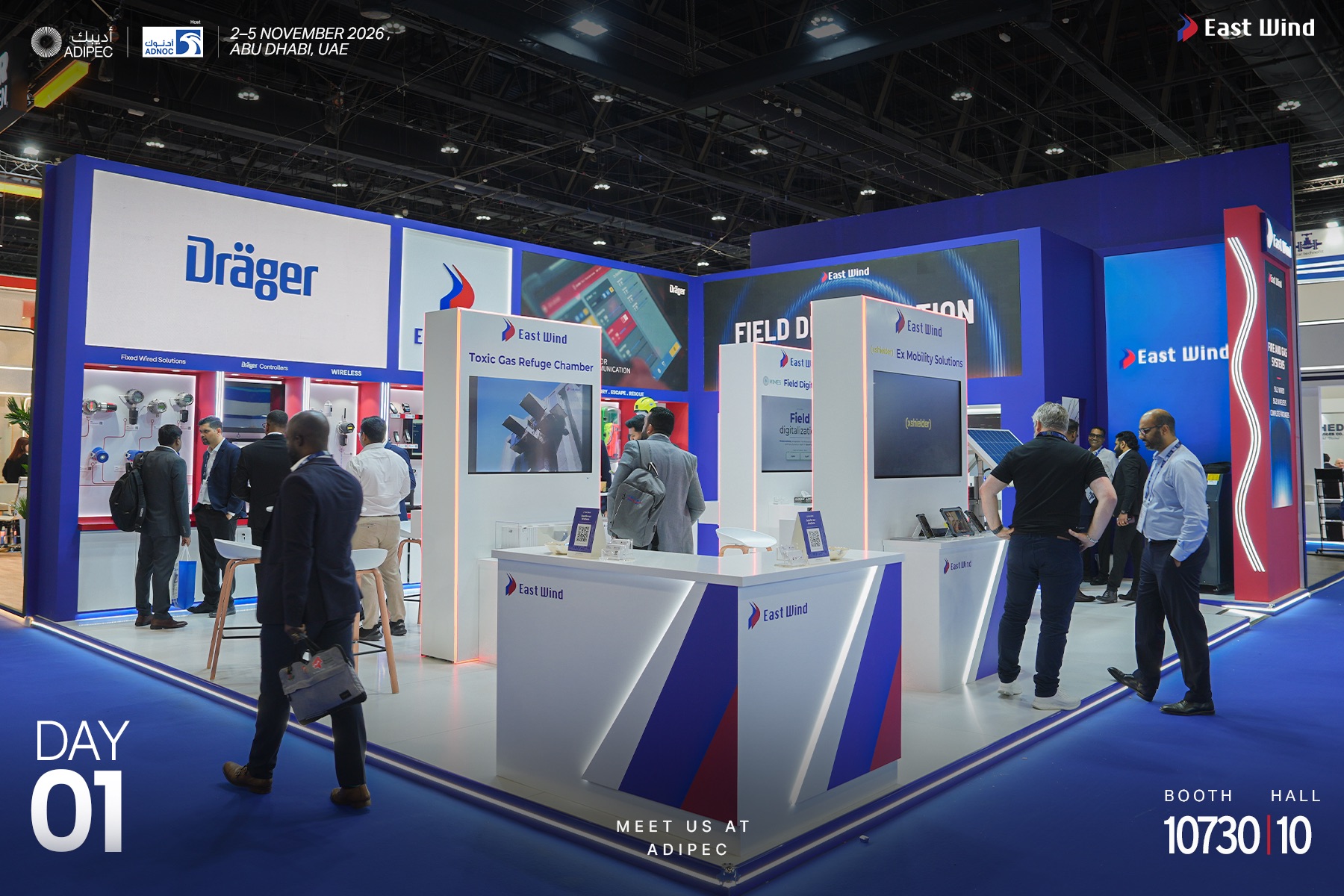
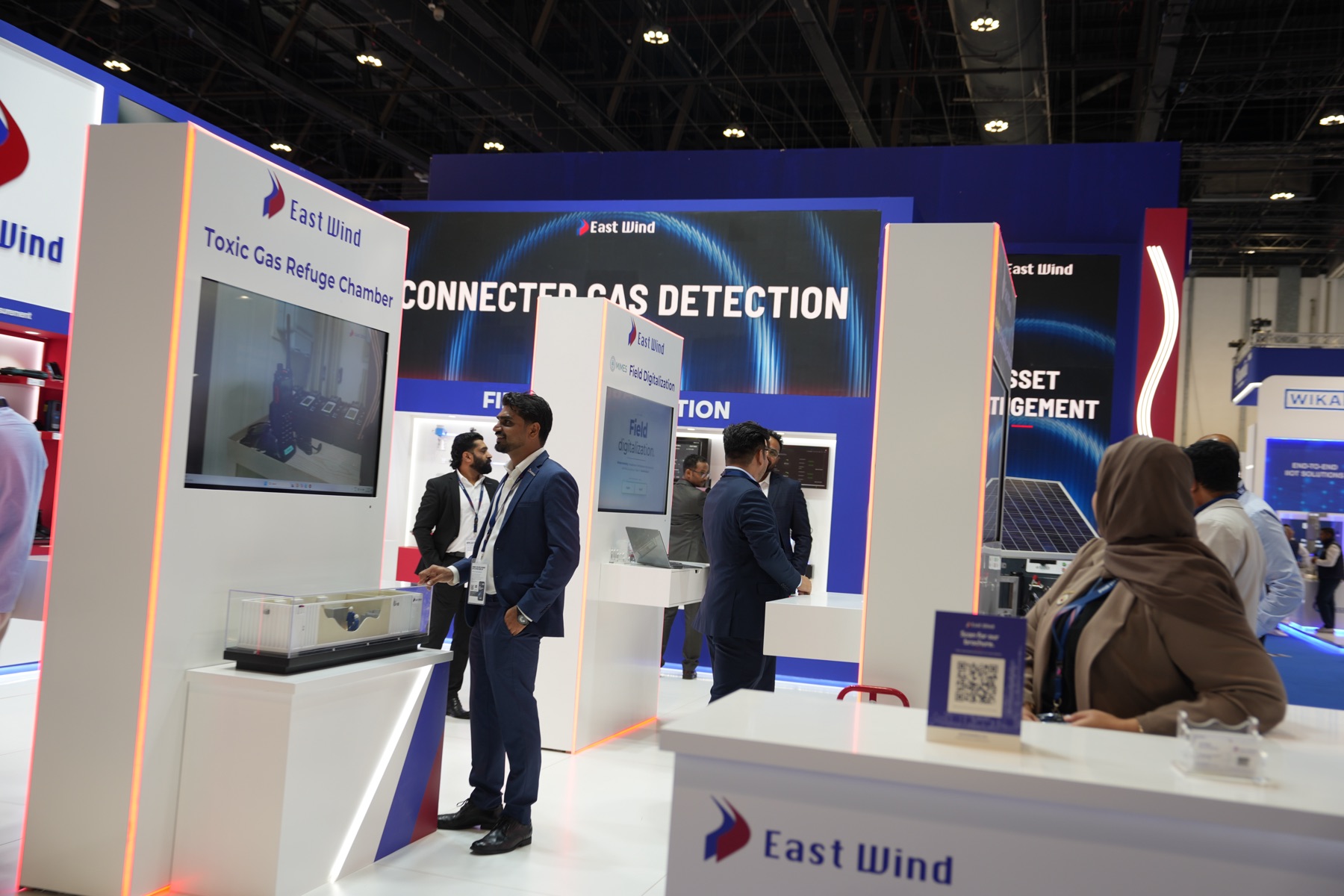
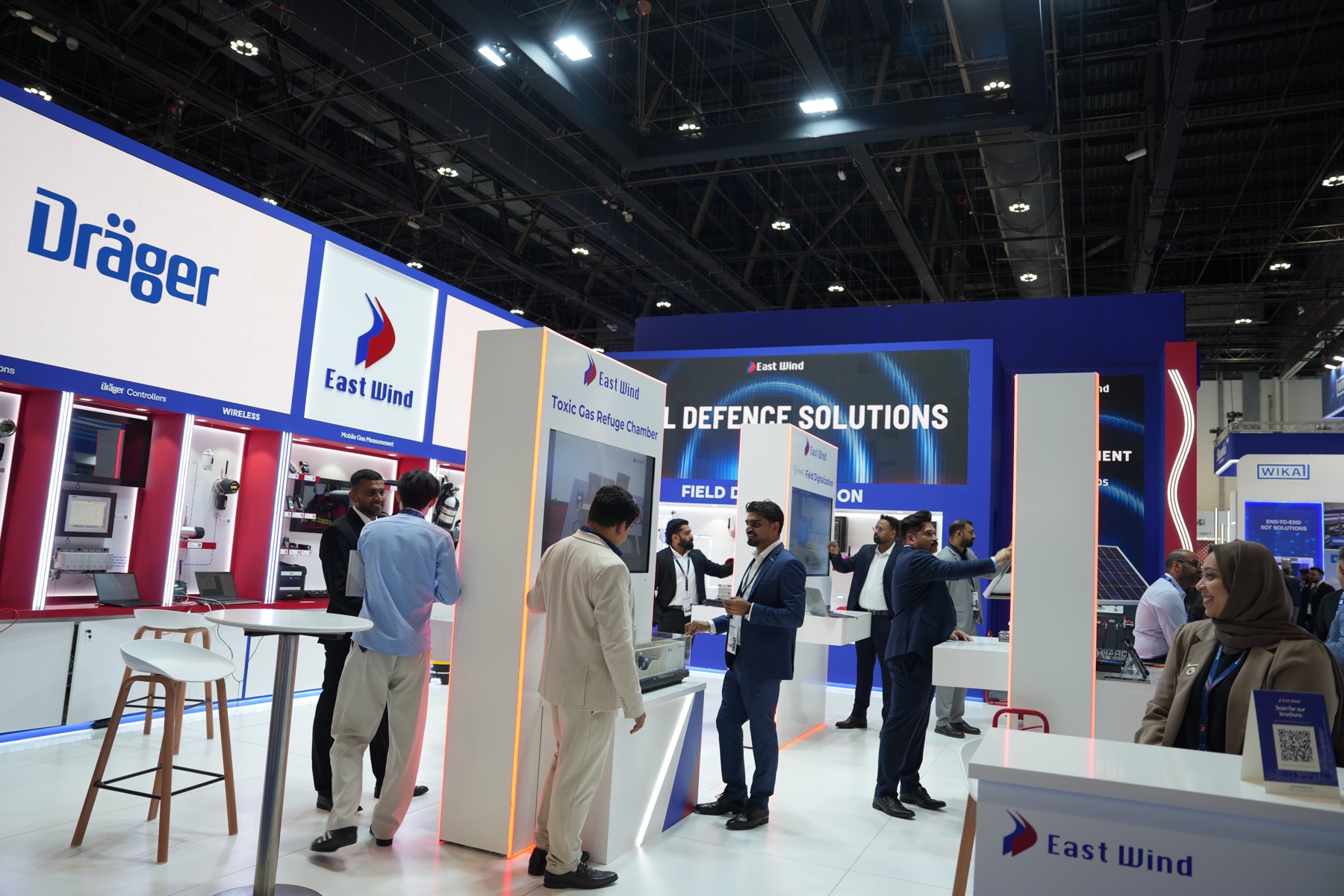
The East Wind and Dräger stand on day one of ADIPEC 2026 The stand from the aisle Field digitalization product wall Visitors at the refuge chamber display Stand counters on day one Connected gas detection display Stand overview

What these show: the stand as built. The product wall in the third photograph follows a reading from the field device to the control room, the same story the interactive display tells.

Day one highlights, shot and cut on the show floor and exported the same day. Select "Sound on" to hear it. It shows the turnaround, and the interactive display in use on the stand.
The Nardi One loop for the 600 × 1000 portrait screen. It shows a portrait screen getting its own composition instead of a cropped landscape.

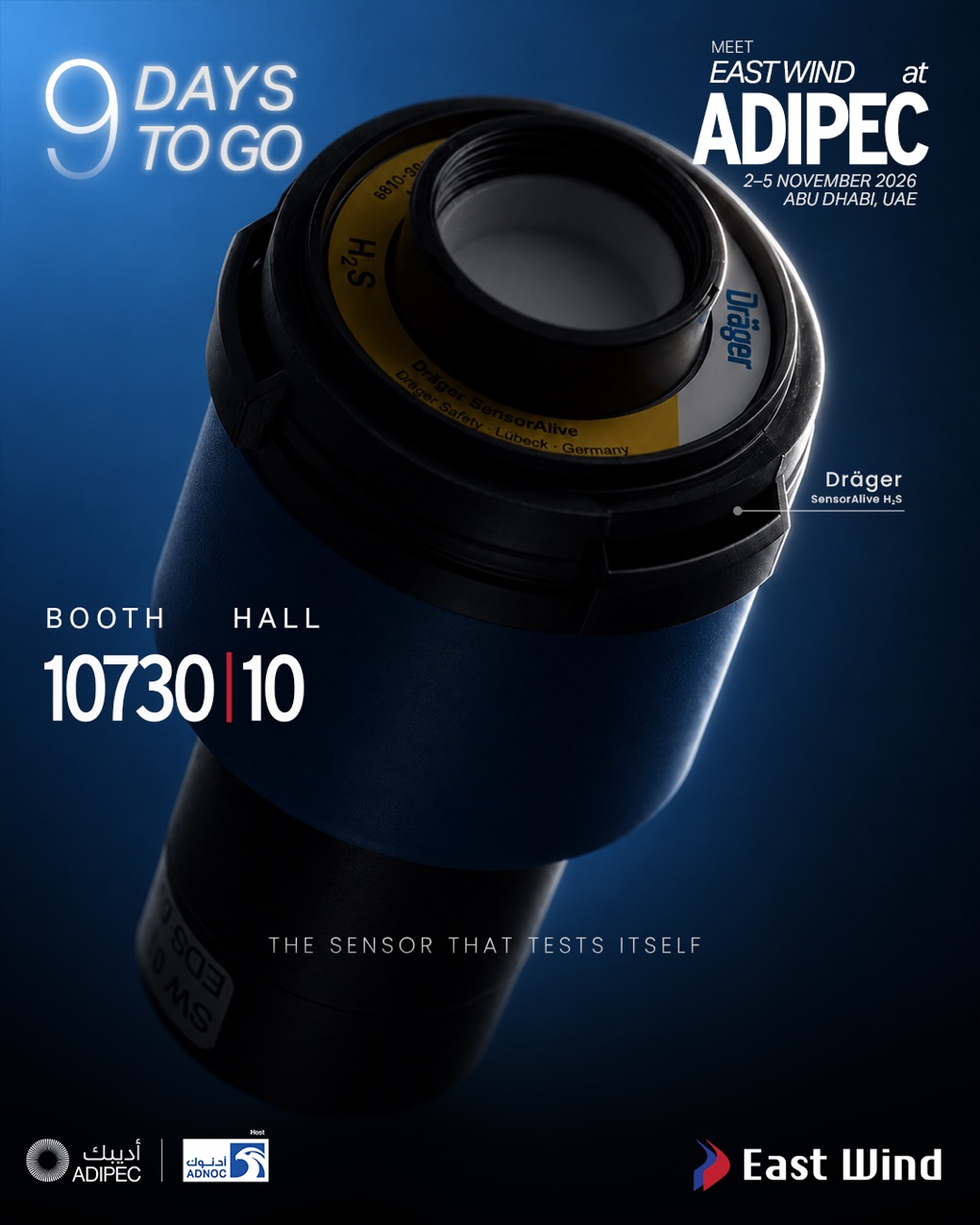
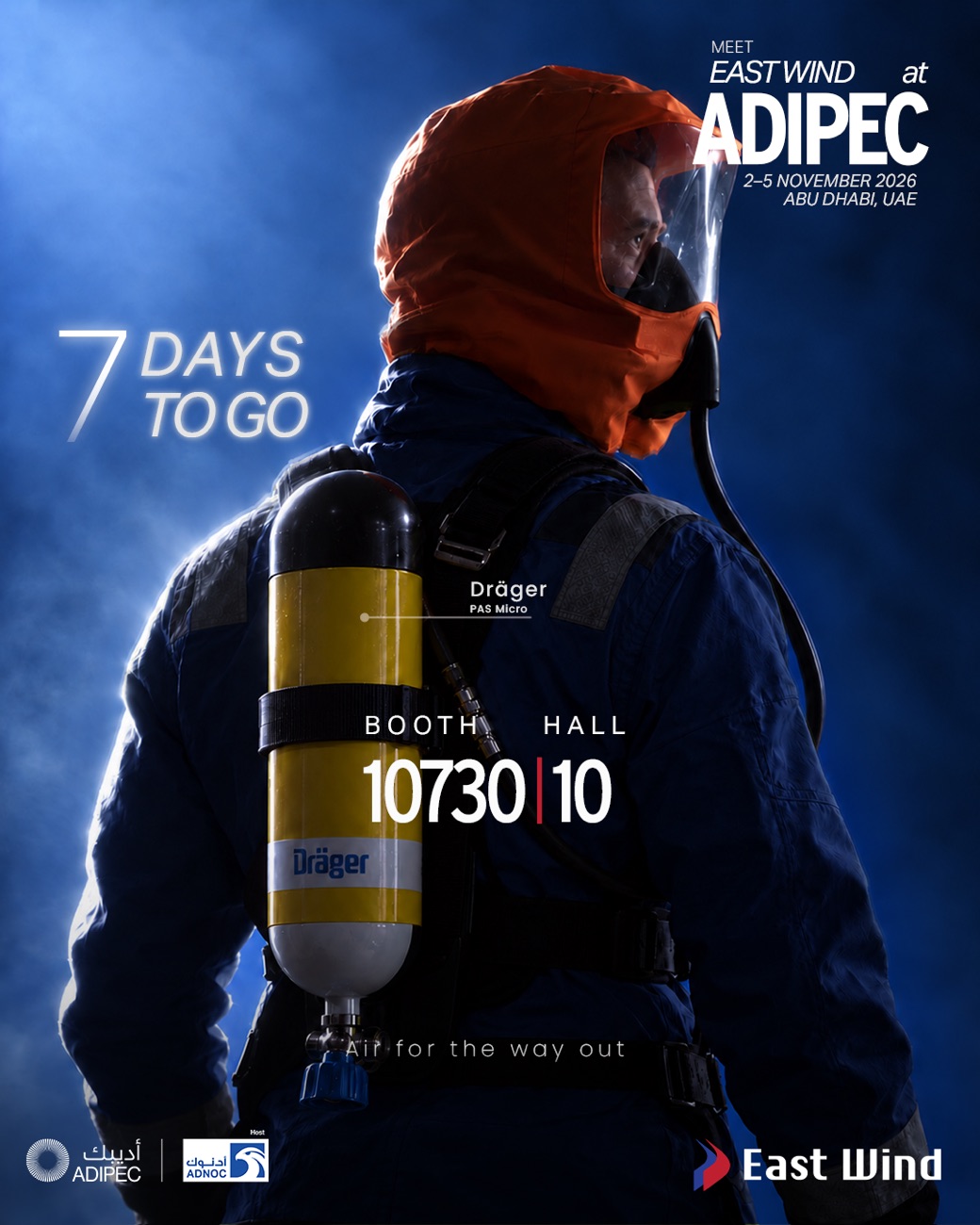
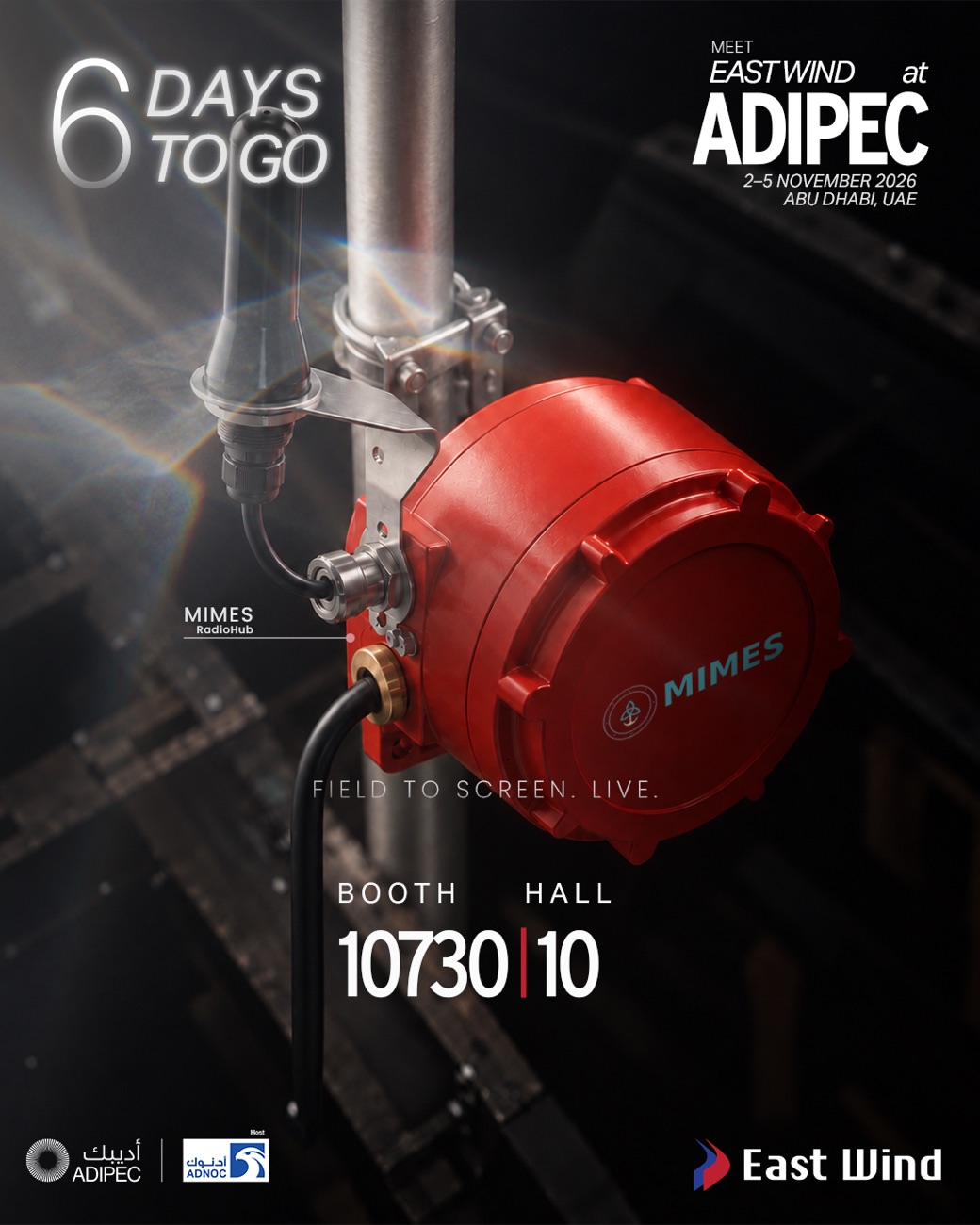
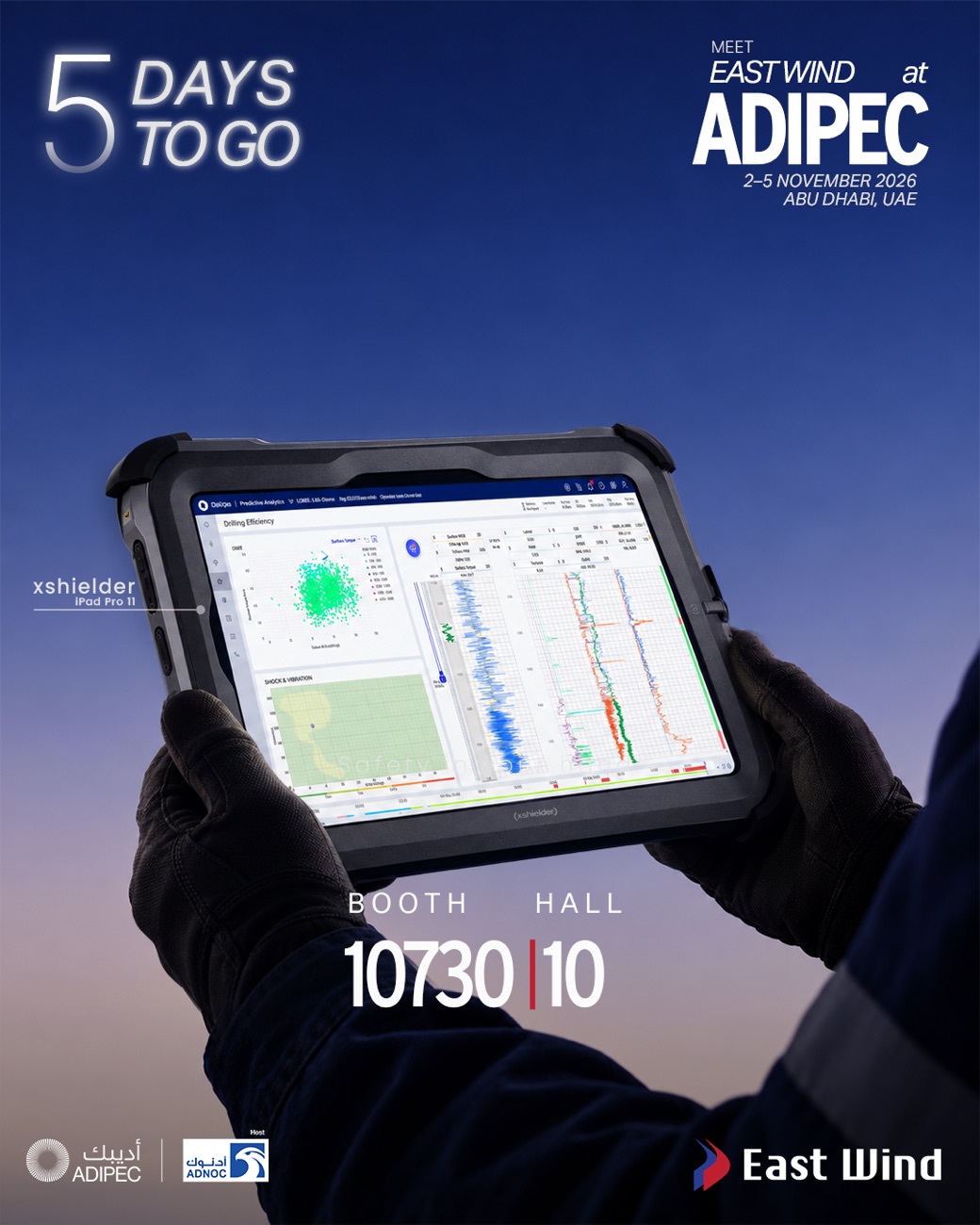
The countdown

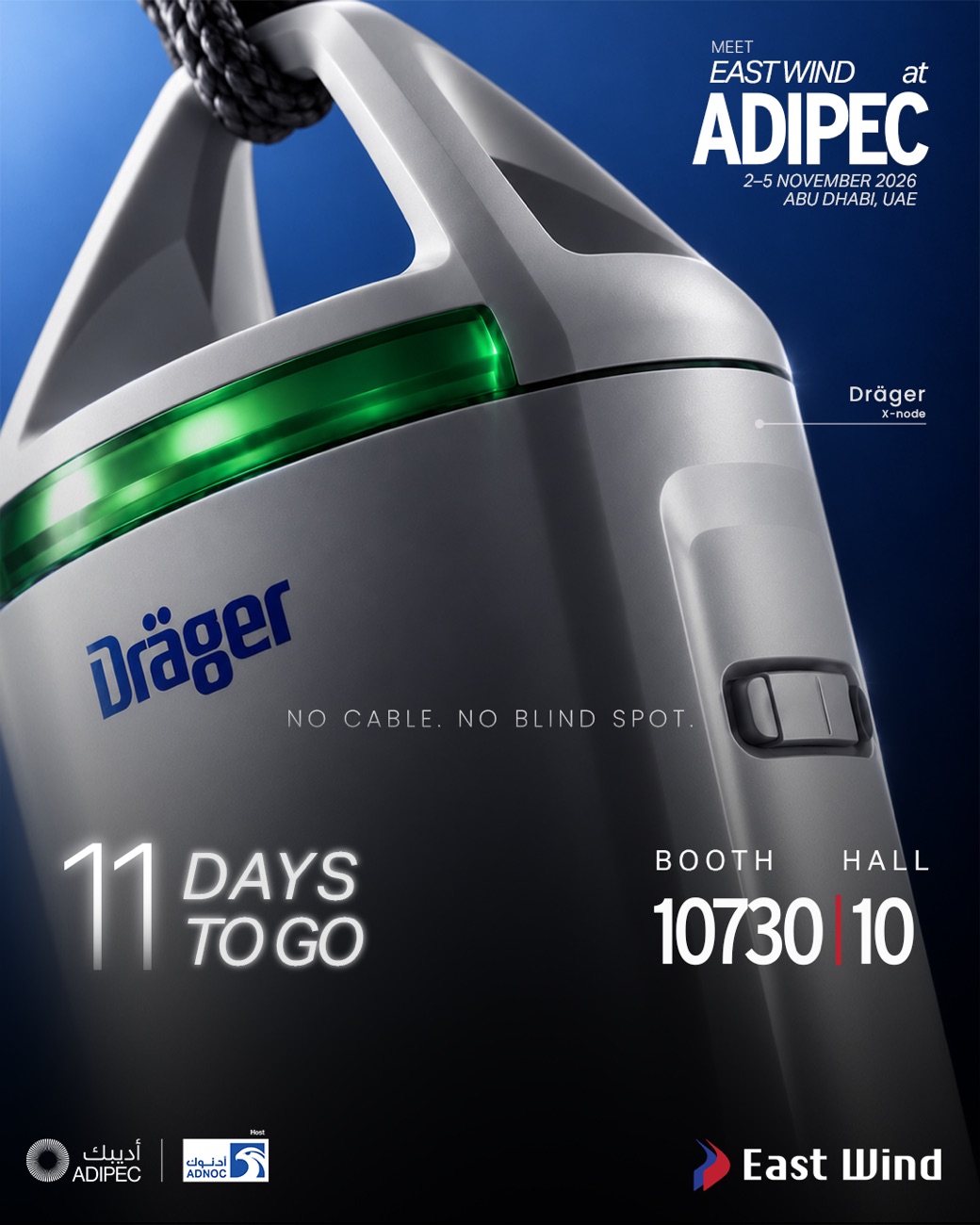
ADIPEC countdown poster, 11 days to go ADIPEC countdown poster, 9 days to go ADIPEC countdown poster, 7 days to go ADIPEC countdown poster, 6 days to go ADIPEC countdown poster, 5 days to go

Five posts from the countdown. They show one layout held for the run, with a Dräger, MIMES or xShielder product inside the same East Wind frame each day.

02.

One reading, from sensor to control room

Flagship project. Interactive display

Field digitalization display

An interactive 3D plant that lets a visitor follow one wireless reading from the sensor to the control room, in English and Arabic, with or without a salesperson beside it.

Made for
East Wind Safety, in my role at Gravity Business Process, to explain wireless monitoring technology from MIMES, a manufacturer East Wind represents.
When
Built in sixteen days, 19 October to 3 November 2026.
Status
A build ran on the East Wind stand at ADIPEC 2026. The final build, number 71, is packaged for the stand builder and for staff.
My role and team
Concept, experience design, script and creative direction. The software was written by AI coding agents to my briefs, and I directed the builds.
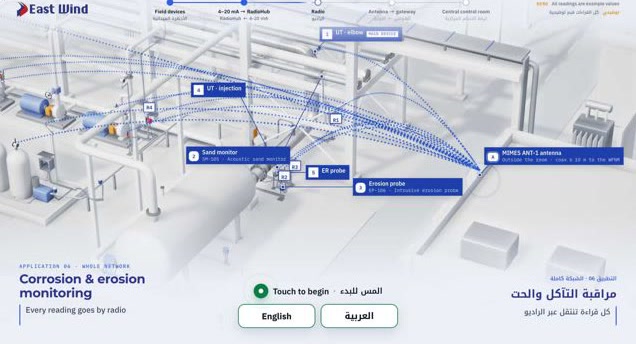
Screen capture of the field digitalization display: a 3D plant with signal paths and English and Arabic captions

The display itself is running in this frame. Leave it alone and its tour starts; select English to try it.

This is a screen capture. On a wide computer screen, with motion playing, the display itself runs in this frame.

10
applications, each with a title card
EN / AR
captions side by side
8 s
idle before the tour starts by itself, from build 70
71
numbered builds in sixteen days
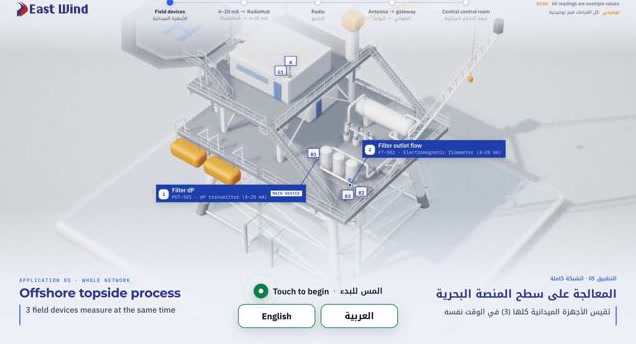
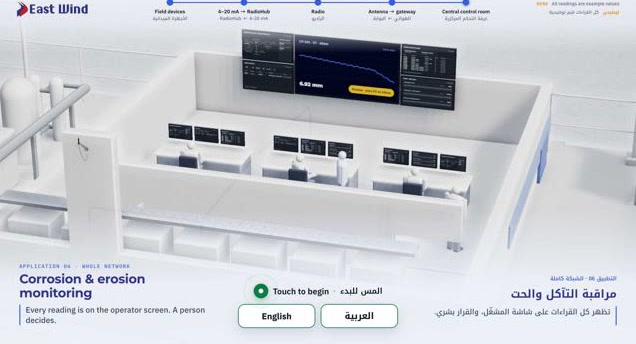
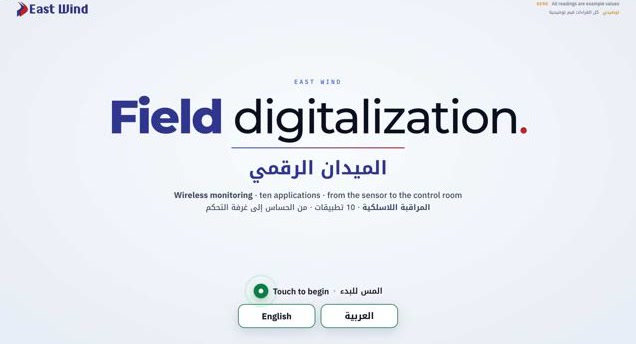
Offshore topside process view, captured from the displayControl room view with the operator screen, captured from the displayTitle card in English and Arabic, captured from the display

Three screens captured from the display. They show a whole-network view, the control room where every reading ends, and the two languages sharing one screen.

Business problem
Wireless instrumentation is invisible. A brochure can list ten applications, but an engineer wants to see where the sensor sits and how its signal gets home.
Audience
Instrument and HSE engineers at the stand, alone or with a salesperson, reading English or Arabic.
Constraints
One file that runs offline on a stand PC. Any screen shape. Safe to leave running all day. Technical statements that an engineer will test.
The idea
Let a visitor follow one reading from the sensor to the control room in a live 3D plant, and stop to look around at any point. From build 70 the display also plays this by itself as a tour, after eight seconds without a touch.
Decisions and reasons
  1. A live 3D page instead of a video, so a visitor can stop, choose an application and look around.
  2. Follow one reading hop by hop, from sensor to control room, instead of showing the whole network at once.
  3. English and Arabic captions side by side during the tour, so nobody waits for their language.
  4. Two hand-over packs, because a stand builder and a salesperson need different things.
Execution
Ten applications with a signal path that lights as the reading moves. A presenter mode for staff. Kiosk start files and a test sheet for the builder. A workbook holding every line of text in both languages.
Quality checks
Seventy-one numbered builds: 69 before the stand opened and two during the show. Builds were checked with automated touch runs in English and Arabic with the network off, and with simulated-visitor audits. A register tracked 33 technical points for East Wind to confirm; where sources disagreed, the claim came off the screen. Testing was on the development machine, and a 23-point test sheet was written for the stand PC.
Results
A build ran on the East Wind stand at ADIPEC 2026; the day-one film shows it in use. Builds 70 and 71, released on day two, added the self-running tour and then corrected it for screens that are not 16:9, each with a checksum and a rollback step.

The same method, a second build: One Seven foam test

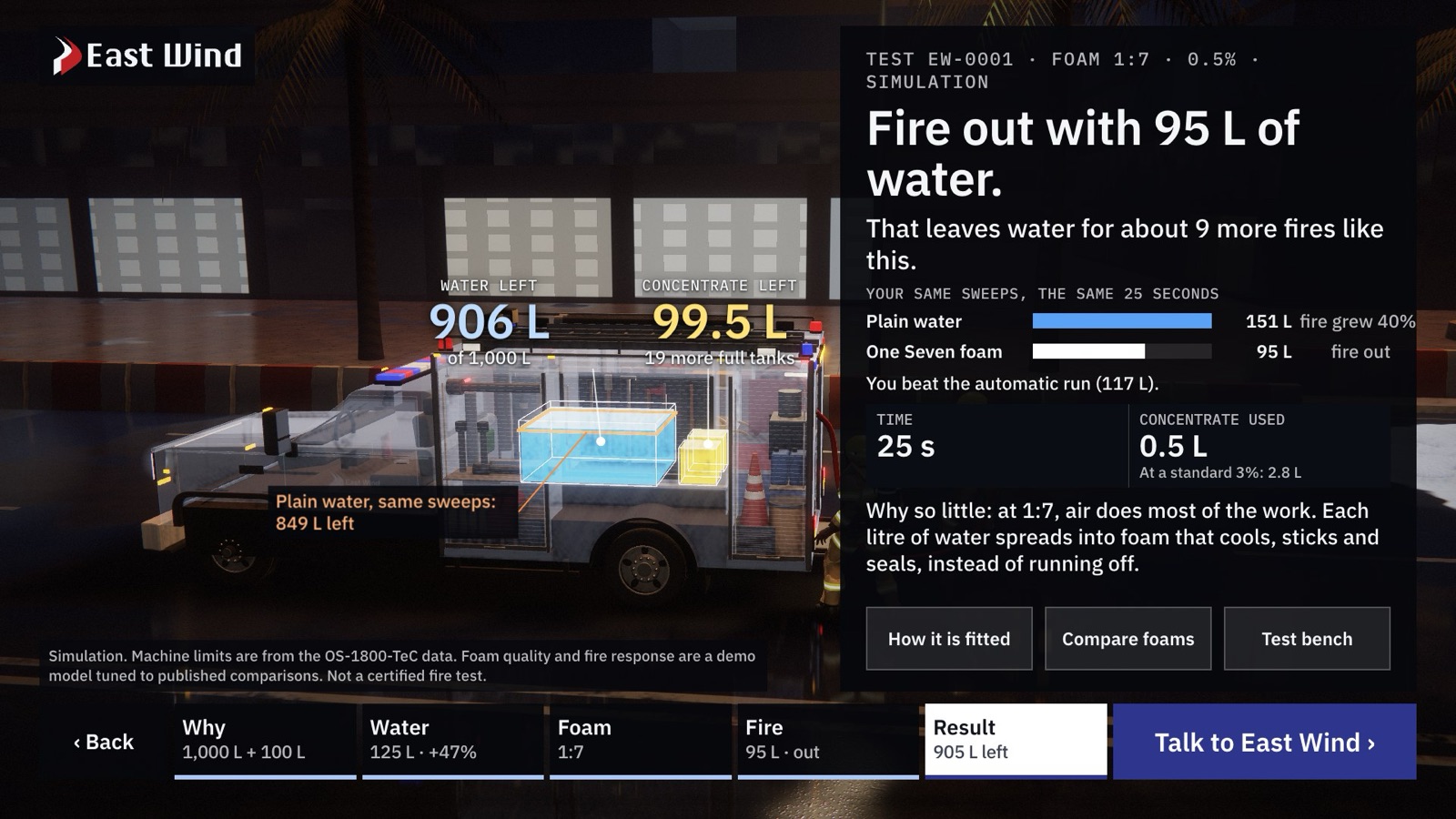
The display's film mode, 1:28. The visitor fights the same car fire twice, with plain water and then with compressed-air foam, and watches the tank gauge. One Seven states that its system makes seven parts foam from one part water; the display lets a visitor see what that means.
Result screen of the foam test, comparing the water run and the foam run
The result screen. It says on screen that this is not a certified fire test, and names where its figures come from. Status: a working build in English.

How a display is built

  1. Brief

    A written brief, rewritten when the direction changes. The field digitalization display has a specification dated 19 October 2026 and a working brief dated 21 October.

  2. Question

    List what a visitor will ask at the stand, in their words. For the field digitalization display that list was written on the second day of the build.

  3. Build

    The 3D scene and the interface are built as one page by AI coding agents, one numbered build at a time.

  4. Review

    Builds are checked with automated touch runs and audited against the visitor questions. Findings go into the next build.

  5. Hand over

    One file, a builder pack with a test sheet and checksums, and a staff pack with a presenter guide. The release note lists what was not tested.

03.

Through traffic, to the fire

Flagship project. AI-generated film

Rapid intervention vehicle

A 64-second film showing what a rapid intervention vehicle is for: a compact fire truck built to reach an incident fast. Every scene is AI-generated.

Made for
East Wind Safety, in my role at Gravity Business Process.
When and where
Made from 1 to 7 July 2026. A second, 54-second film of the vehicle was made in the 1800 × 600 banner format for the ADIPEC 2026 stand; its export is dated 2 November 2026, the opening morning.
Status
Delivered. 1:04, mastered at 4096 × 2304, with sound.
My role and team
I directed the film. The stills, clips and edit were made in-house; the working files are dated 1 to 7 July 2026.
The complete film, 1:04. Select "Sound on" to hear it. Every scene is AI-generated; no real incident, street or person is shown. It shows one vehicle holding its shape and livery from the first shot to the last.
Business problem
A rapid intervention vehicle is hard to explain in a brochure, because it looks like a pickup. What it is for only shows on the way to a fire, and that cannot be staged on a public road.
Audience
Fire and rescue buyers and industrial site operators, watching on an exhibition screen or a LinkedIn feed, usually without sound.
Constraints
The vehicle had to stay the same vehicle in every shot. No road closure, no stunt driving, no live fire.
The idea
Follow one response from the station door to the fire, and show it from outside: from the cars and buses the vehicle overtakes.
Decisions and reasons
  1. Stills before motion. Every shot was settled as a still first; a still is cheap to fix and a clip is not.
  2. One vehicle design held as the reference for every still, so its shape and livery do not drift between shots.
  3. Cut to the beat of the music, so the film keeps its pace on a silent screen.
Execution
Reference images on 1 July 2026, stills from 2 July, image-to-video clips on 6 and 7 July, and the master on 7 July. The stills were made with GPT Image. The project folder holds 38 stills and 23 clips.
Quality checks
Stills were regenerated until the vehicle matched its reference, and only then animated. The review was done in the edit.
Results
Delivered as a 1:04 master with sound, within seven days of the first reference image. A second film of the vehicle, in banner format, followed for the ADIPEC 2026 stand.
04.

Supporting work

Each item labelled by type

Interactive build East Wind Safety, November 2026

Asset management

Every item on a fire truck carries a tag, the truck counts its own kit, and the control room sees which trucks are ready. Four trucks and five hands-on situations. A working build in English, tested on the development machine. Screens from that build play here.

Exhibition Eastwind Energy Arabia, Riyadh, October 2026

WPC Energy Congress

A booth film with English and Arabic titles, a 3458 × 1152 wall film for the wireless story, and six backlit lightboxes around the stand. Final files are dated 3 to 12 October 2026; the congress ran from 11 to 15 October.

AI-generated film East Wind Safety, Intersec, January 2026

Amphibious rescue truck

A tower fire on a waterfront, and a rescue that arrives from the sea. The opening 33 seconds of an 84-second film shown on the East Wind stand's main screen at Intersec, Dubai. Every scene is AI-generated.

AI-generated film GravitEx and East Wind Safety, ADIPEC 2026

xShielder launch films

One of three fifteen-second films made for the launch of a phone case its maker rates for hazardous areas: a walk into the zone.

Concept render of a showroom screen wall

Concept East Wind Safety, 2025 to 2026

Showroom concept

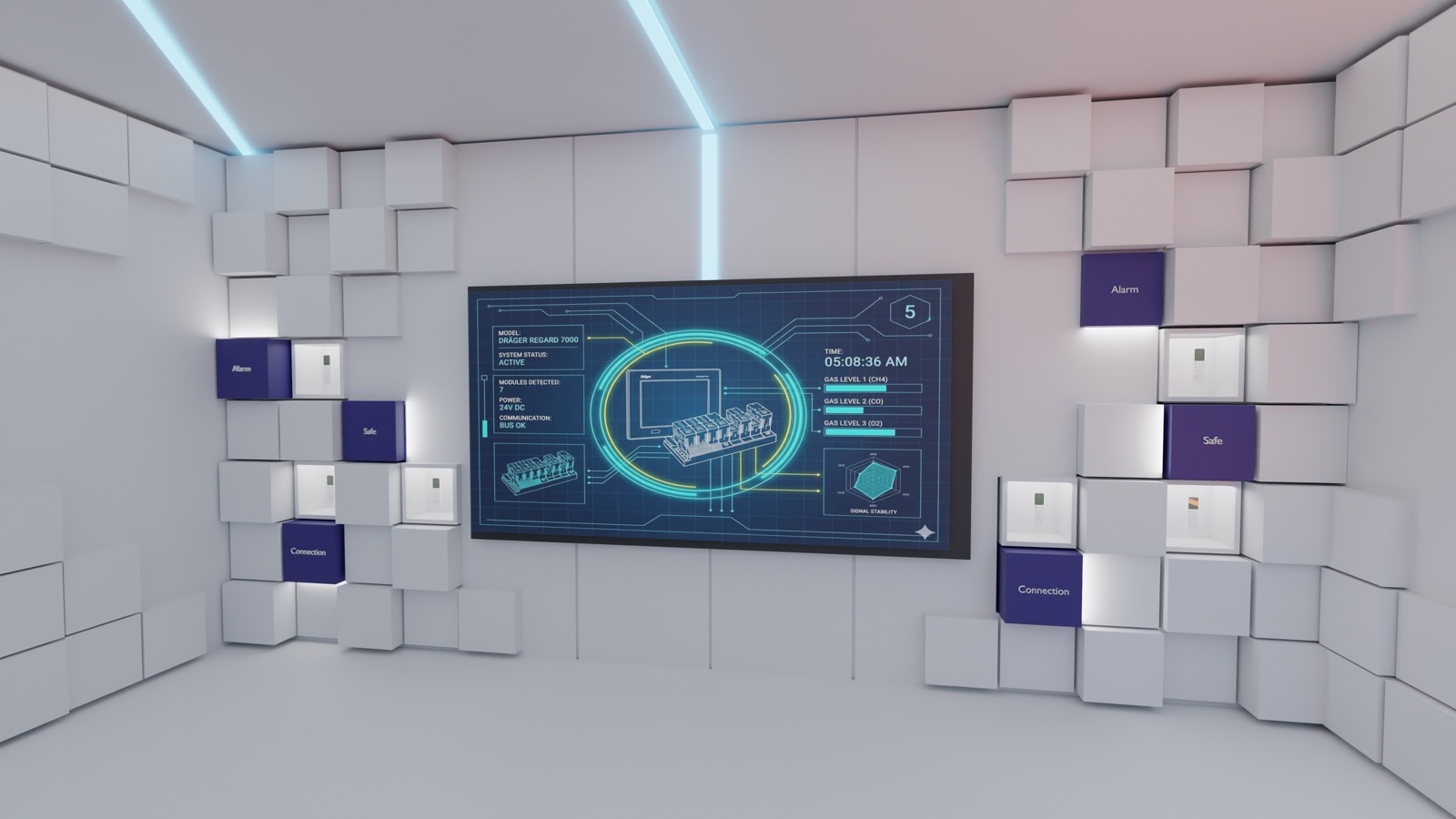
A 3D concept render for a showroom, made to settle walls, screens and product positions before a builder is briefed. A concept, not a photograph of a built room.

Personal film Personal work, 2026

FIAT

A war film in eight acts with two spoken words, written and produced by me. 6:07; the first 80 seconds play here. Made with Midjourney frames and Runway image-to-video.

Monthly campaigns

Monthly LinkedIn campaigns for the brands. Across 2025 and 2026 the team produced 195 posts and 62 key visuals. The designers make the posts to my briefs; I set the direction for each brand.

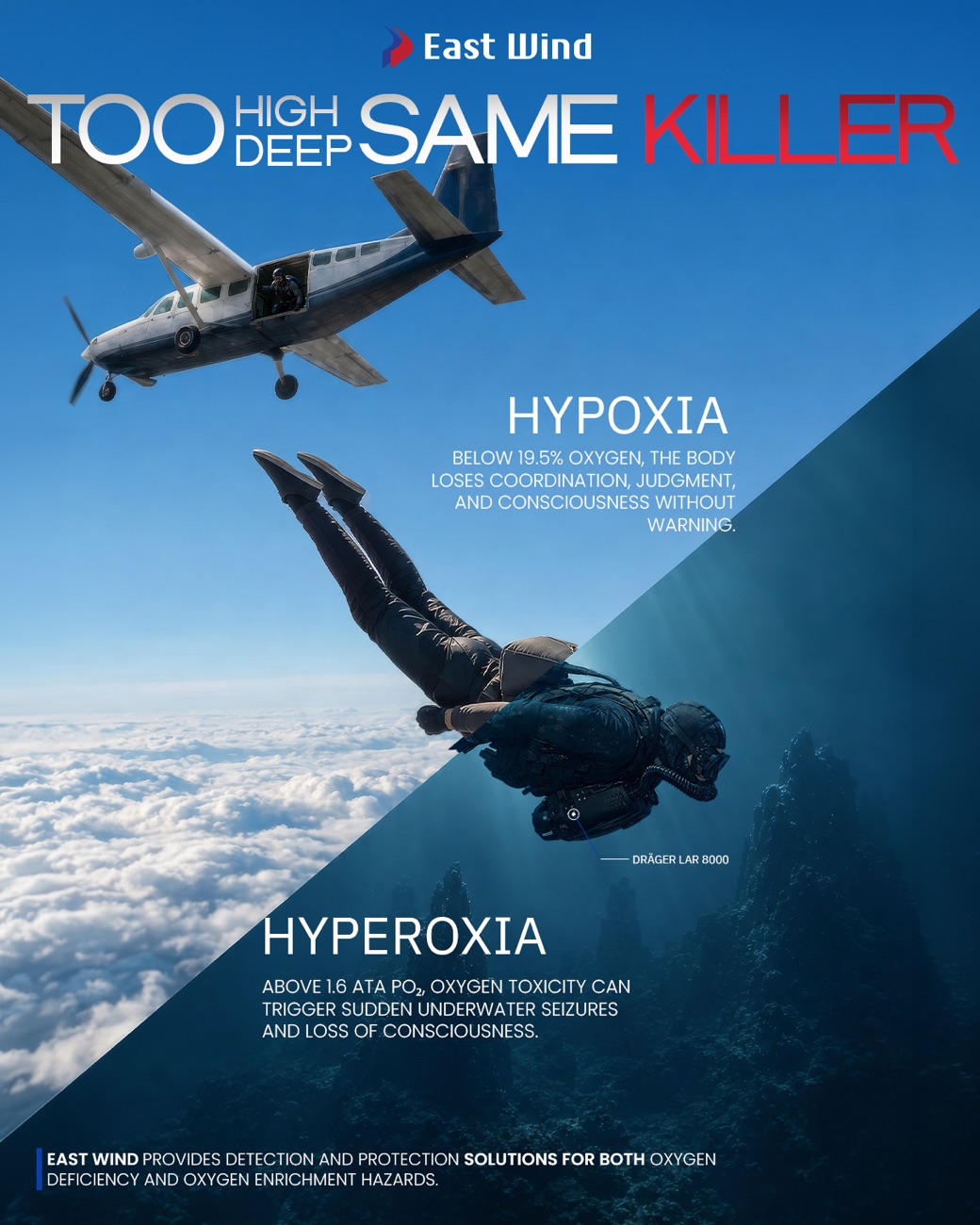
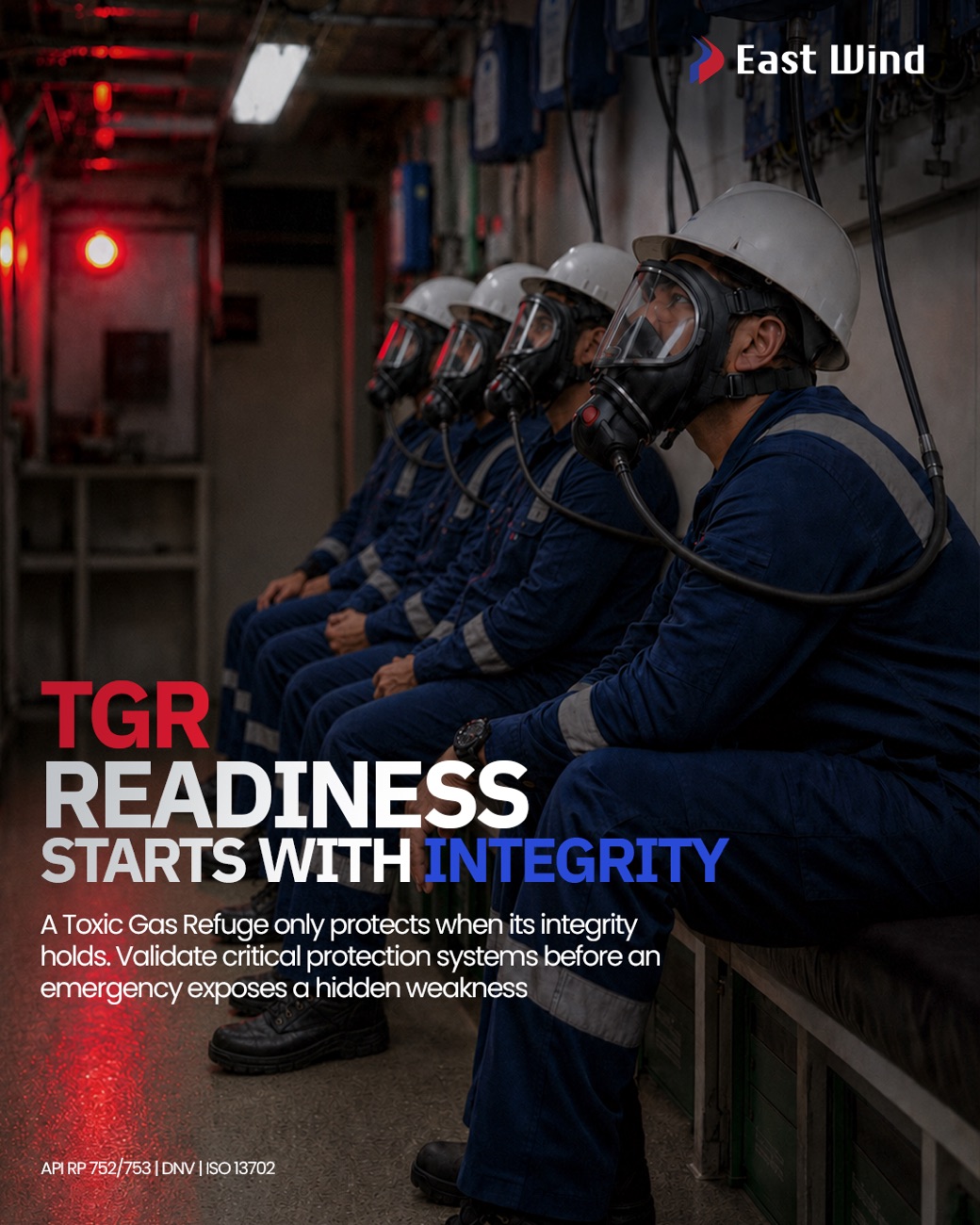
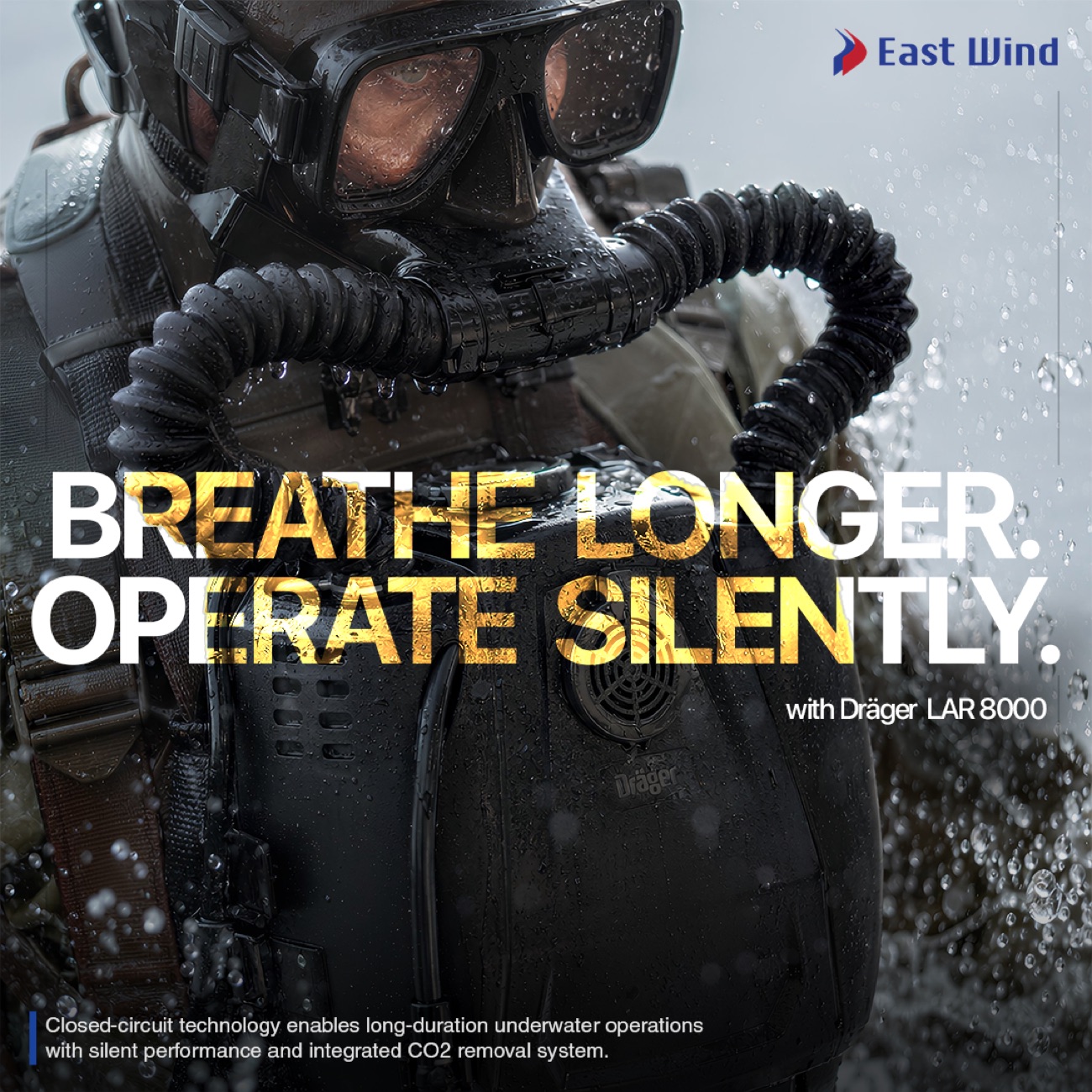
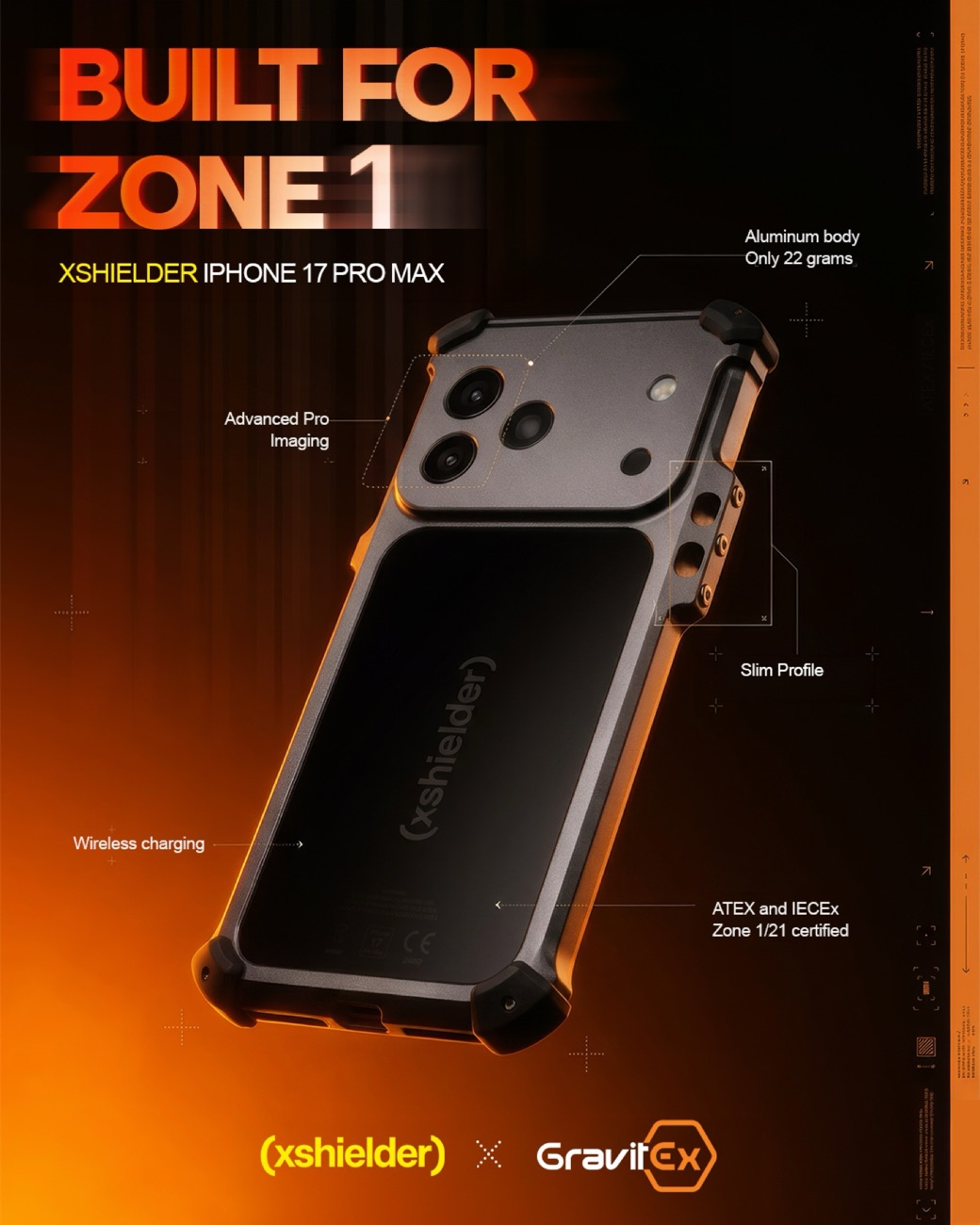
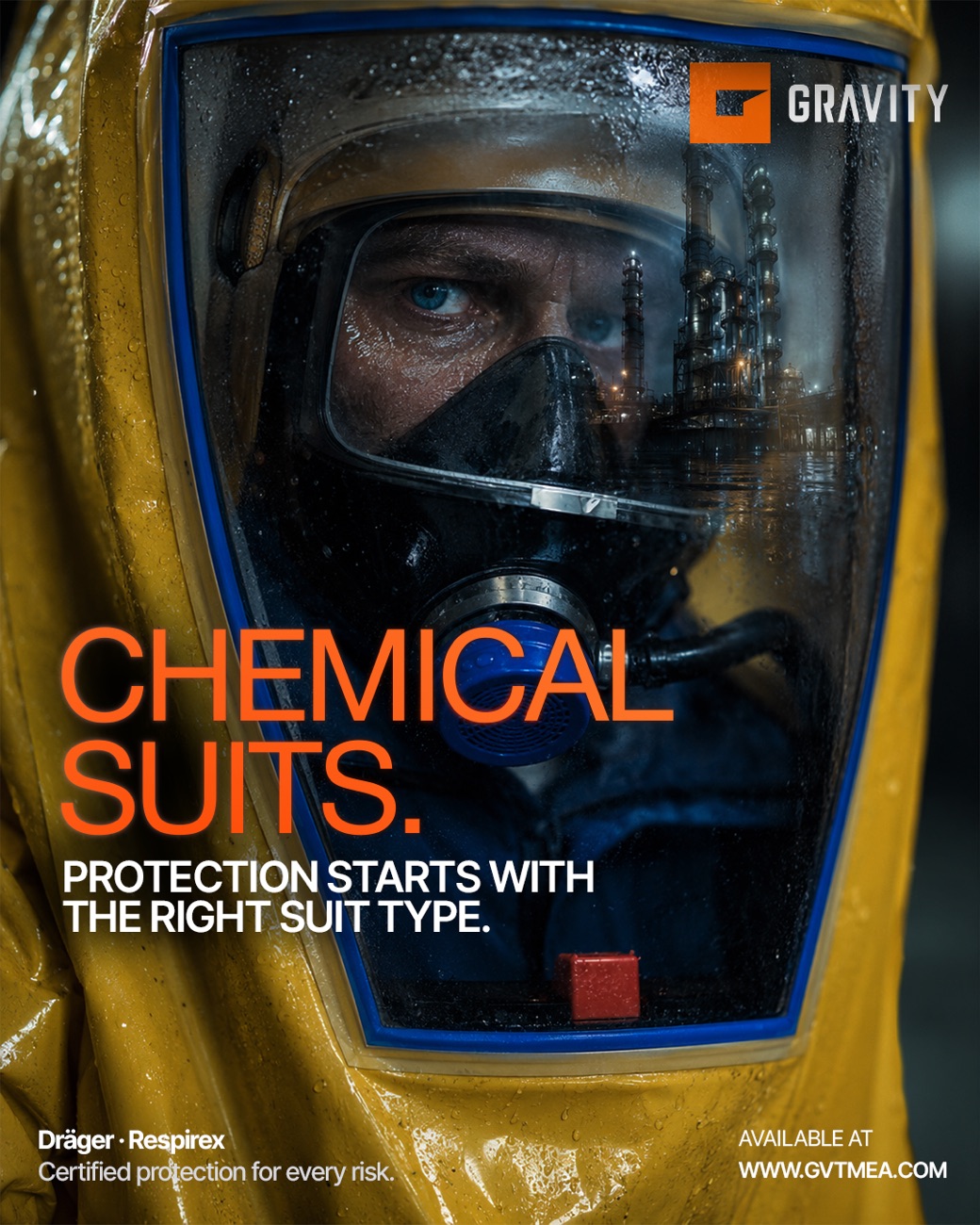
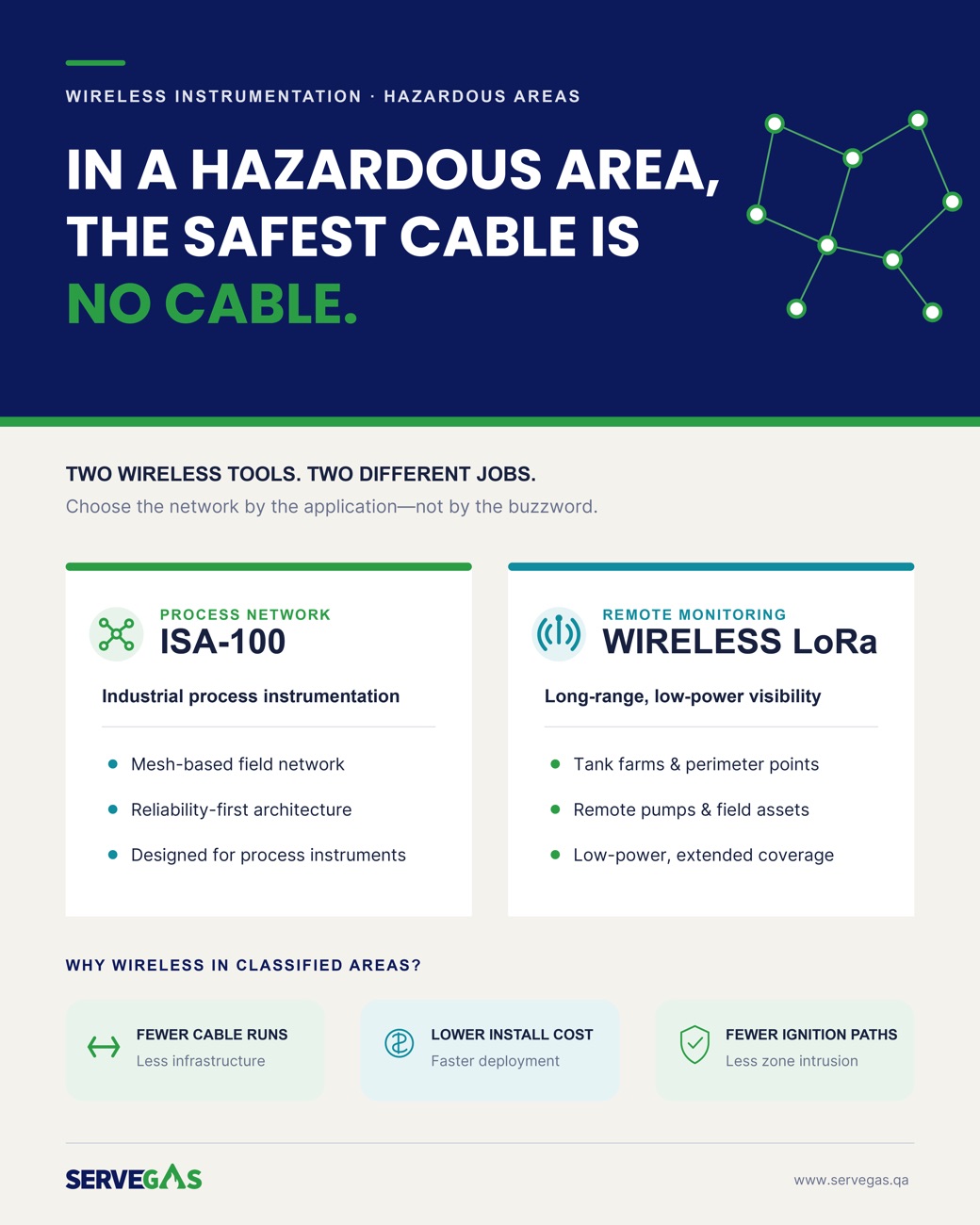
East Wind Safety poster: Too high, too deep, same killer East Wind Safety poster: Toxic gas refuge readiness East Wind Safety poster: Breathe longer, operate silently GravitEx poster for the xShielder case GravityMEA poster: Chemical suits Serve Gas poster: In a hazardous area, the safest cable is no cable

Six posts from four brands. They show each brand in its own colour. Design by the team's designers, to my briefs.

05.

How I lead, and how the work is run

Leadership and operating approach

Working to a written brief

The field digitalization display and the asset management build each have a written brief on file. The display's specification is dated 19 October 2026, the night its first prototype ran, with a working brief for the live build written on 21 October. The asset management brief is dated 26 October, the day that build began.

Building the team

In November 2025 I wrote the role definitions for a graphic designer and a motion editor, both built around an AI-assisted workflow, and ran the hiring. The team is now three to five people.

Allocating the work

One brand's June to August 2026 calendar assigns 48 posts by name: 25 to one designer, 20 to the other and three to me, each with a date, a format and notes on what the post must not imply.

Quality under pressure

On day two of ADIPEC 2026, with the show open, a new build of the stand display added the self-running tour. It was released with a checksum, a rollback step (keep the previous file on the PC until the new one has run) and a list of what had not been tested. A second build that day corrected the tour for screens that are not 16:9.

Handling a technical decision

The day before ADIPEC opened, East Wind decided that every sensor in the field digitalization display should run on one wireless standard. Five sensors had no confirmed model on it, so their cards say "model to confirm" instead of naming one.

Handing work over

A display is not finished until someone else can run it. The field digitalization display was packaged as two packs: for the builder, the application, start files, a 23-point test sheet and checksums; for staff, a practice copy and a presenter guide.

AI-assisted production, as practised

Stills first
Every shot is settled as a still before it is animated. Problems are found where they are cheapest to fix.
Reference matched
Generation starts from reference images of the product. Prompts fix what must not change, such as on-screen text, numbers and layout, and drift is corrected in post where it can be.
A tool for each task
Midjourney and GPT Image for stills. Kling and Seedance for motion. Magnific for upscaling. AI coding agents for the interactive builds.
A person decides
I review the work before it is released. The edit, sound and grade are done the conventional way.
Labelled on screen
The interactive displays mark simulations and generated images as such, and the foam test's result screen says it is not a certified fire test.